






Thrive. For Life.

Thrive. For Life.
Ask any parent today about their biggest worry for their child's future, and a new answer has crept into the conversation alongside grades and college admissions: "Will AI make what my child is learning irrelevant?"
It's a fair question. But it's also, in many ways, the wrong one. The real question isn't whether AI will change the world your child grows into - it will. The real question is whether your child's early education is building the kind of thinking that no AI tool can replace. That's exactly what the IB Primary Years Programme (PYP) at GD Goenka World School is designed to do.
Education systems around the world are moving in the same direction. Inquiry, problem-solving, and interdisciplinary thinking are being prioritised over memorisation - not as a trend, but as a response to a simple reality: information recall is no longer a scarce skill. A search engine or an AI assistant can retrieve facts instantly. What they cannot do is wonder, question, connect ideas across contexts, or exercise judgement about what matters and why.
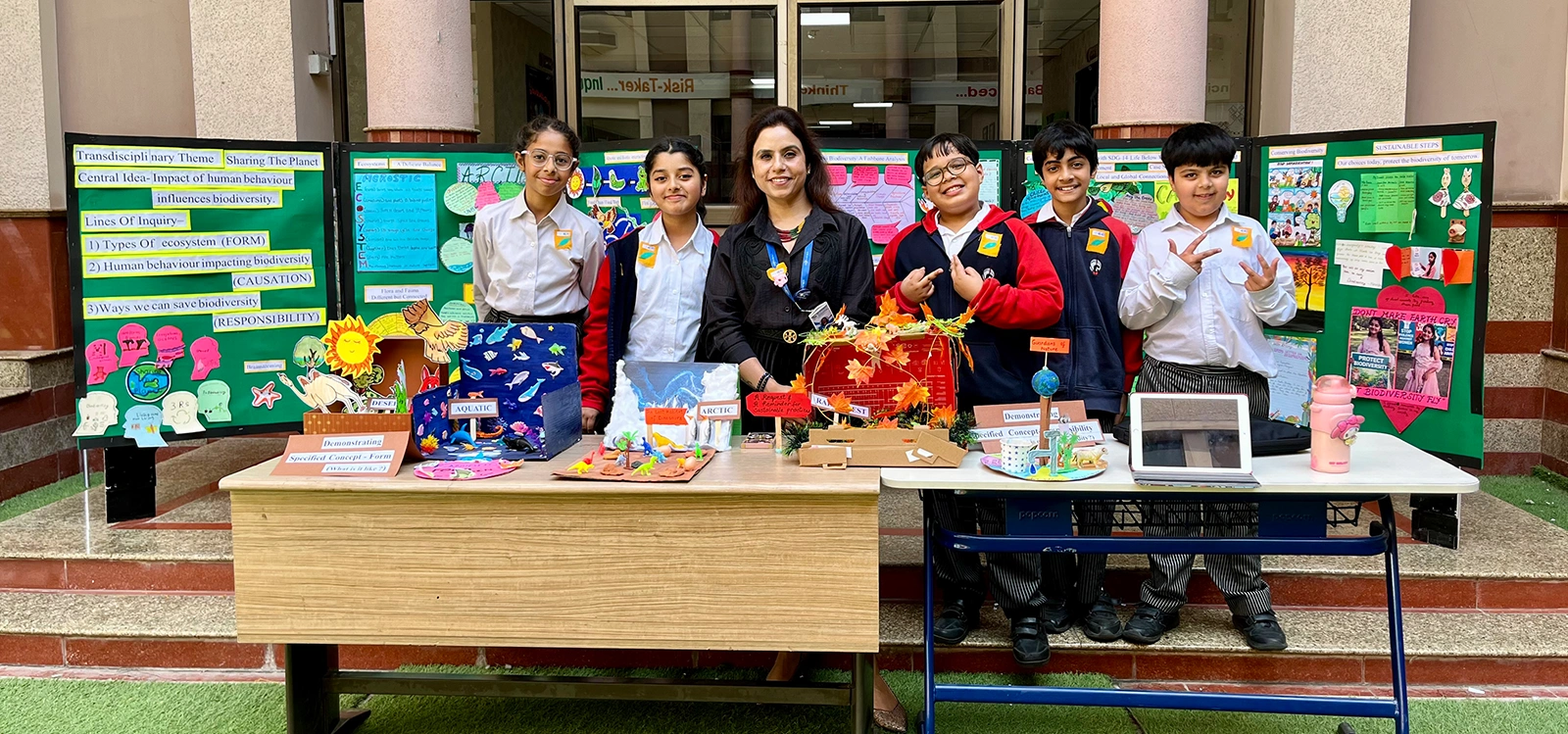
This is precisely the terrain the IB PYP was built for. Rather than teaching subjects in isolation, the PYP organises learning around transdisciplinary themes - how the world works, how we organise ourselves, how we express ourselves - encouraging children as young as three to ask questions and construct their own understanding, guided by teachers rather than fed by textbooks alone.
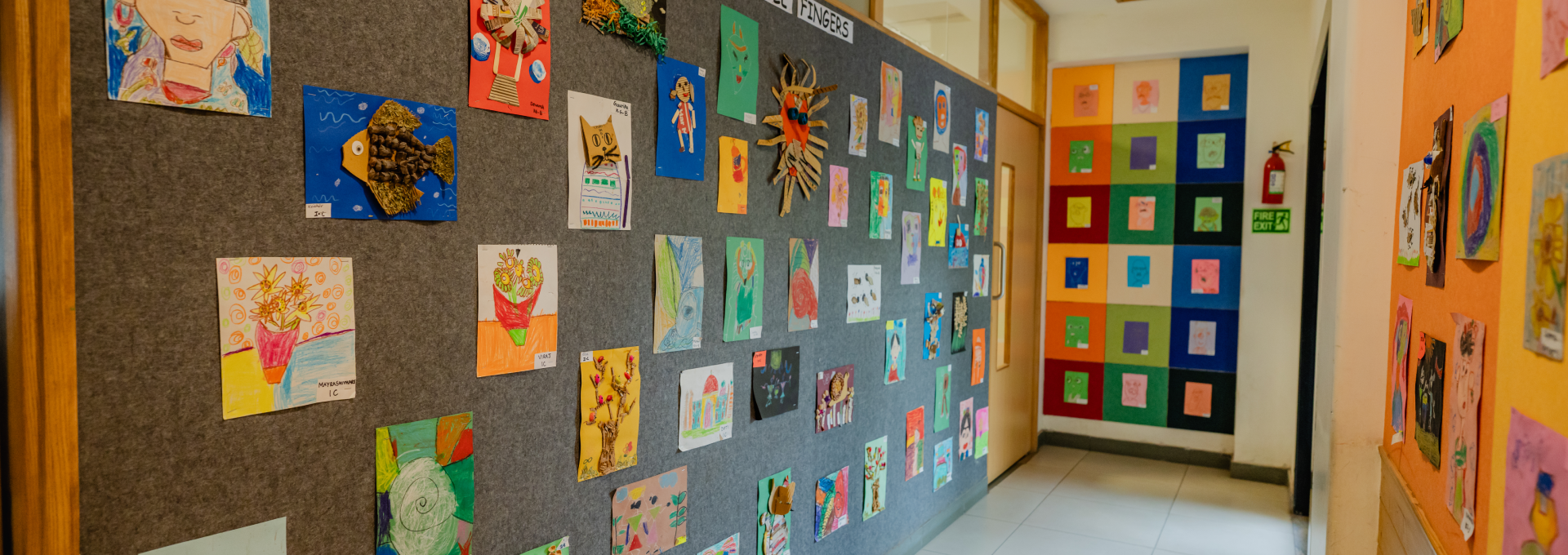
Walk through the inspired learning spaces at GD Goenka World School's Sohna Road campus, and you'll see this philosophy in motion - collaborative studios, science labs, and open learning areas built for exploration rather than passive instruction. Young learners aren't handed answers; they're guided toward discovering them, developing the habits of curiosity and reasoning that form the foundation for every stage that follows.
This matters enormously for continuity. Because GD Goenka World School offers the complete IB and Cambridge continuum - from PYP through to IGCSE and the IB Diploma Programme - the inquiry-based habits built in the early years aren't abandoned at a curriculum handover. They compound, year after year, within a single consistent community.
Parents sometimes assume the choice of an early-years programme matters less than the choice of a senior-school board. In an AI-shaped future, the opposite may be true. The habits of mind formed between the ages of three and eleven - curiosity, resilience, and independent reasoning - are far harder to retrofit at sixteen than they are to nurture from the start.
This is also why GD Goenka World School's boarding and day-school community matters. A child immersed in a consistent, inquiry-driven environment - supported by the pastoral care and residential facilities available to boarders - has more room to develop these habits without disruption.
Q. Is the IB PYP only suitable for children planning to study abroad eventually?
No. The PYP builds foundational thinking skills - inquiry, reasoning, collaboration - that benefit any future pathway, whether a student continues into the IB Diploma, IGCSE, or any other stream later on.
Q. How does GD Goenka World School support young learners transitioning into the PYP?
Dedicated early-years educators, small-group learning, and purpose-built inspired spaces help children settle into inquiry-based learning at their own pace.
Q. Can PYP students at GD Goenka World School continue seamlessly into Cambridge or IB Diploma programmes?
Yes. GD Goenka World School's uninterrupted IB–Cambridge continuum means students progress from PYP through Cambridge Lower Secondary and IGCSE to senior programmes without changing schools or pedagogical culture.
Admissions for Session 2026–27 are open. Apply now or request a campus visit to see how the PYP experience at GD Goenka World School is shaping the thinkers of tomorrow.