






Thrive. For Life.

Thrive. For Life.
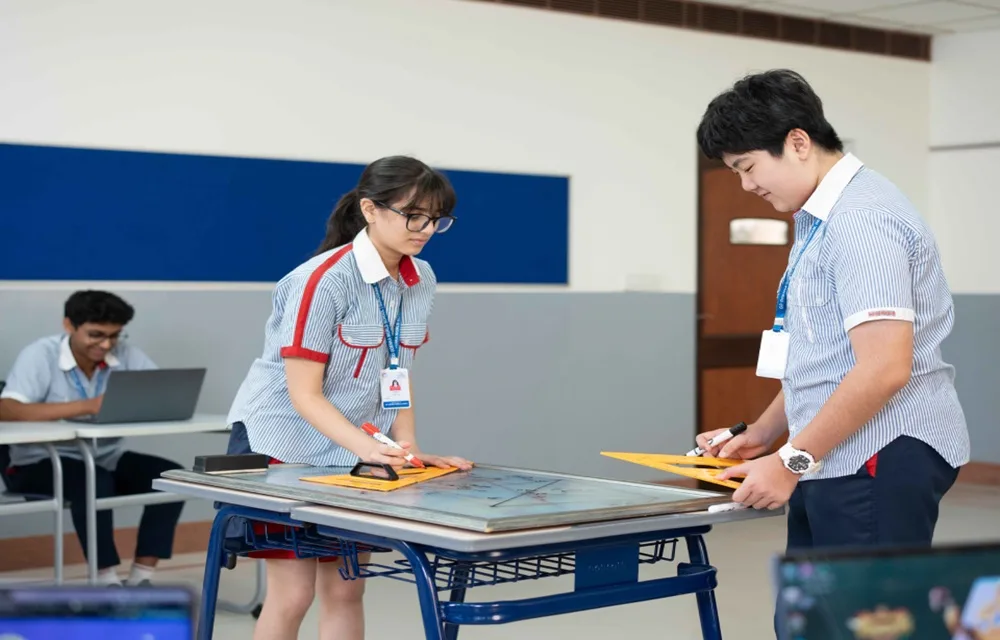
Today, parents seek schools that offer international curricula, which allow their children to access opportunities at global universities. Therefore, many families explore IB curriculum schools in Gurgaon. Through these curriculum teachers take up foster approach which include debates, students participate in conceptual test in classrooms. The child will also get meaningful projects related to history, science, and cultures across continents. Early on, students practice research, cooperation, and confident communication.
While these students develop these skills on the other hand university counsellors’ steps in to openly discuss overseas campuses, scholarships opportunities and real-world exposure. Curiosity naturally grows when classroom lesson is similar to today’s real-world challenges, making the transition to higher education always make it logical next step. By managing deadline, diversity effective presentations and engaging in regular reflection, students get the independence and maturity required to navigate their journey towards premier universities worldwide with confidence.
These curricula are designed to support encourage curiosity through memorised answers, instead of silent notebooks. The discussion in the classroom spark interest, enthusiasm and meaningful debate with teachers help student with deepen understanding of the world. Automatic memorisation rarely inspires true learning instead, students engage with concepts, explore challenges and confidently express their ideas:
Curious conversations redefine the IB Curriculum Schools in Gurgaon classrooms. Teachers invite students to question ideas instead of accepting them quickly. For instance, a history topic may spark debates and thoughtful arguments. Moreover, students examine sources carefully before forming confident conclusions. In contrast, memorized answers rarely survive deep discussion or probing questions.
Consequently, students compare viewpoints and evaluate evidence with patience. Research projects demand planning, reading, and steady analytical thinking. For example, a science investigation may involve experiments, observations, and reports. Meanwhile, teachers guide discussions without dominating student curiosity. Indeed, these habits gradually sharpen reasoning and academic confidence. Thus, students present ideas clearly during seminars and collaborative projects. Global universities notice applicants who analyse issues with maturity. Ultimately, these skills prepare students for demanding global academic environments.
Students debate global topics in vibrant classroom discussions. A geography lesson may examine continent-wide cultures. Teachers present diverse cultures. In contrast, restricted perspectives rarely foster empathy or understanding. Students appreciate views created by varied experiences. Different group assignments inspire diverse students to work together. Culture affects choices and societal ideals, as discussed.
IB classrooms gradually nurture independence through everyday academic routines. Students plan assignments carefully while balancing projects and upcoming deadlines. Moreover, teachers encourage personal responsibility instead of constant supervision. For instance, a research task may stretch across several weeks. Students organize schedules and manage progress with firm determination.
In contrast, rushed work rarely produces thoughtful insights or meaningful learning. Reflective journals help students track effort and academic growth. Group projects require coordination, patience, and steady time planning. Indeed, discipline forms slowly through repeated efforts and careful choices. So, students arrive prepared for demanding university workloads later. These habits support confidence during independent study abroad. Self-management thus becomes a powerful advantage in global academic environments.
IB curriculum schools in Gurgaon open meaningful paths towards global universities. In schools like GD Goenka World School the classrooms therein encourage curiosity, discussion, and thoughtful exploration across subjects. Students examine ideas carefully while connecting knowledge with real experiences. Consequently, they develop confidence while presenting research and collaborative projects. In contrast, traditional memorization rarely nurtures curiosity or independent academic thinking.
Indeed, this environment gradually shapes disciplined and thoughtful learners. The IB Diploma Curriculum strengthens preparation for demanding university expectations. As a result, students approach international campuses with maturity and academic confidence.